I have a three-year-old. We never gave her a screen time until she was already 1 year old and even then it was slow-paced content that does not turn her into a zombie. Now, she knows how to play content via Google commands and it is often difficult to control her; but it was possible to control what she watches. Until about 4-6 months ago. The AI slop is destructive to your child’s development, brain development, and does not really teach your child anything.
I was watching content with my daughter when I realized that the content generated on this channel is actually extremely poor quality. Toby Town.
Disclaimer: I am not saying this is the only channel that has AI generated content (the “AI slop”), or poor quality content. There are so many examples of channels that generate content via AI and directly publish it to YouTube.
YouTube has recently started controlling and limiting the AI generated content, because, let’s be real. It’s plain stupid, lame, and sloppy. Sloppy on the content side and sloppy on the responsibility side of the creator. For me, the following three are the biggest concerns when it comes to the content. And before I share that, I honestly, do not care what my child (in a child-friendly manner) watches. If she wants to watch rock climbing, I’ll watch with her, if she wants to watch how to make buildings with magnetic tiles, I’ll buy a bunch of magentic tiles and build with her. What I would not accept is the content that damages her connection to the reality. And this is the outline or the boundary that I have set. So let’s take a look at why AI-generated content is wrong for your kids.
#1 Physically inaccurate behavior
Even in 2026, AI lacks a connection to the real world. AI does not know how objects behave in motion. Everyone is enjoying the ASMR videos of sun being cut into two, or how frozen nitrogen sounds when cut by a damascus steel made out of wood. When you read the statement, you can already picture different elements and know what is possible and what is not. If you are not able to differentiate between that from the sentence above, then perhaps, you can stop reading further. This article is not for you.
I gave Gemini this prompt and this is the video that it generated this video:

For fun, it makes sense to have such ASMR content. But for the kids who are learning every second, this video does not really teach them. And if you overstimulate their learning experience with such “fake” content, it is damaging to their development.
A child is still in the learning phase, and they need to learn what is possible, what sounds are there, how mass works, before anything.
My bike teacher told me the perfect one-liner: it is easy to learn, but it is extremely difficult to unlearn what you have learned.
The videos demonstrate such movement that will not be possible in this physical world. The little brains that are just learning how the movement works, are more likely to be confused by the AI-movement than appreciate it.
#2 Auditory and visual coordination
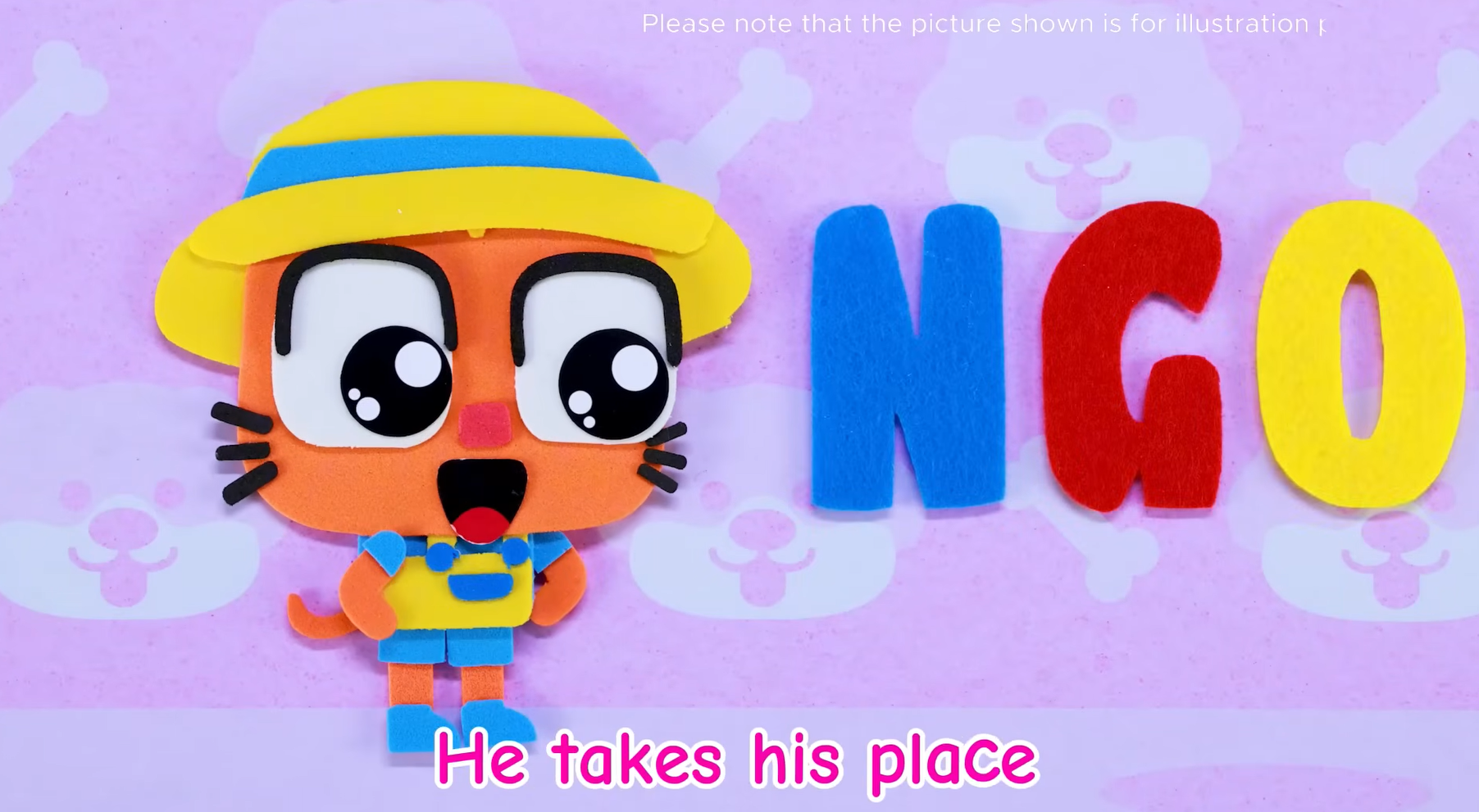
For starters, various videos do not have the audio and visuals match the scenario. The facial expressions do not match the emotion of the scene, the audio does not cue what may happen. Another problem is, time over time, I’ve seen videos where an audio and a video clips are merged together that do not belong together. Even if they are from the same publisher or creator, they do not match the on-screen behavior. A short example of this is, this video, where the on-screen content is a video about “BINGO the dog“, but the sound is about “boo boo song“.

The more you watch this content, the worse it gets. The captions say something else, the “speaker” sings something entirely different. There is a label on the top that again has nothing to do with the content on the screen. The content is a stop-motion animation.
And this is not the only example, this was actually the final straw where I decided that I needed to write this piece. You can look at this video and it shares the same story.
#3 AI doesn’t know how to cry
I have seen my daughter learn a lot from the content on YouTube. When I look at her building structures out of magnetic tiles, or when she demonstrates creating blobs out of clay dough, it makes me happy. I am happy that YouTube is a platform that can provide her a demonstration of “possible”. My daughter learned alphabets from YouTube, she sings along Ms. Rachel, she “claps her hands” with Super Simple Songs. At the end of a video, she has “done something”. Or at least she is building the neural network to be able to do something. The other day she was snapping her fingers at me.
AI-generated content will not be able to demonsrate this. You look at a child crying, or demanding something, and you can see there is a clear different between a child crying and a tantrum. AI content does not distinguish between these two.
Alright, so what to do?
When it comes to AI slop, I guess the only answer is to avoid it at all costs. It is not helpful for your baby, and honestly, it is not help for you either. Your baby will not only be watching content that is not real, the baby will have a hard time differentiating what’s real and what’s possible (think of objects flying through other objects, just because AI thinks that’s possible).
Today, AI-generated content is not limited to videos with generated persons but also for cartoons. These cartoons often do stuff that is not practical, but also not ethical. Since the person (or studio) generating this AI content has only one focus: generate more content. They have no time for quality control or review. Often time they ask AI to further review the content or make it compliant, which the AI does so by adding a label. Even the label does not conform to the content that is actually in the video. A simple label via the simplest video editor would take less time, but the person generating the content has no interest in doing so. Because they are so lazy.
#1 Track what your child watches
I have not given my daughter a separate account, she has a shared account that I can check the history of. I review the content, and I often set the content myself that she would want to watch. Here is how it goes:
Me: “alright, let’s put some video on the TV, which one would you like to watch?”
She: “that one” — as she points to a video with highest saturation in colors.
Me: “nope, that is bad, how about you watch either this video, or that video, or perhaps the last video you really loved?”
She: *thinks a little and makes a choice* “this one, this one”
Me: *plays the video and watches “with her”*
Note that the keyword is “with her”. I don’t put the video on and then grab my phone. I watch the content so that she finds it equally interesting.
Notice how one of the reasons why CoComelon’s videos are less advised for younger children because of the color saturation; YouTube video. In my opinion, it’s better to let your child bump to “baby shark do do do” than this AI-slop.
#2 Downvote the content
YouTube is also locking on to the AI-generated slop content so that they can reduce the number of times it appears. I have not seen useful AI-generated content, yet. The most recent interesting AI-generated (or at least CGI) video was this rollercoaster video that I watched with my daughter. It makes sense to have this CGI or AI-generated content for such scenarios and I am okay with that. The difference is that the CGI generated content is at least reviewed before getting published.
I always downvote a video that reflects the top 3 problems that I’ve listed above. Even though I still receive a recommendation to watch the video again (or another similar AI-generated video). Over the last few weeks, I’ve seen and shown no interest in several videos that often have similar content repeated.
The content, I’ve experienced, continues to reappear but you can continue to avoid and skip the content. YouTube algorithm is very complex, but the amount of slop that is being created can easily fool it. The problem is not that AI slop is being created, the problem is everyone thought it was an easy way to get quick views, subscriptions, and start earning on the platform. This greedy push for monetization flooded the platform with such content. In December, YouTube actually started to fight back on this AI content and a lot of creators saw their content getting less and less views, to a point where some videos are just getting zero views (check Reddit, I don’t mean to point fingers at anyone here).
#3 Have the “tough conversation.”
Our children do not stop watching or consuming content just because we told them. They really need to understand what is okay and what is not okay.
What really worked for me was first telling what AI was (of course, not the whole machine learning course) and then tell why this was not useful. I demonstrated some examples where a baby is sliding on mud and there is no scratch on the baby’s knees. After this explanation, I would give my child a choice that would make them feel in control and in charge. I would decide on the options and they will make a choice.
And like everything else, this is a repetitive approach and you would need to repeat this behavior again and again. The AI videos would continue to show for a while, but your child does not have to watch them.
Did you need to have a tough conversation with your child regarding AI? Honestly, this conversation has been the toughest one so far with my 3-year old. I had to explain what AI is, to explain why she should not watch AI-generated content.
This was it for today, I’ll catch you in the next blog. And if you read until this, I have something to share. I am starting a newsletter on this website and would be sharing similar content in a recurring cadence. If you found this content useful, would you consider subscribing?
Or, let me know what I missed. I’d appreciate that.