
CodeProject is again down, and has been down for the last five days (at the time of the draft authoring in March 2026). I had to confirm it through online down detector platforms to make sure it was not just me. For the community, CodeProject’s down detector was live for a while. When Chris first announced that the platform was changing, it was the start of the end.
A little history
If you are new and do not know what CodeProject is–which, I guess would be the case for so many. CodeProject was “the” website you would go to find articles, blogs, and tips for IT stuff (including, development-related topics, servers and admins, etc.) and the best part was it was community-driven. You, yes you, can write articles and publish them through the site. They had an interesting leaderboard-style levels and trust system where you would start as a rookie (not their terminology) and then slowly and gradually build trust in the site. Your peers in the community would vote, review, and provide feedback for you to learn–trust me, I’ve learned a lot the hard way.

While I was not the #1 (or even #5 for that matter) user of the community, I was about the top some percent. I was actively contributing and being rewarded / awarded various awards, certificates, and prizes.
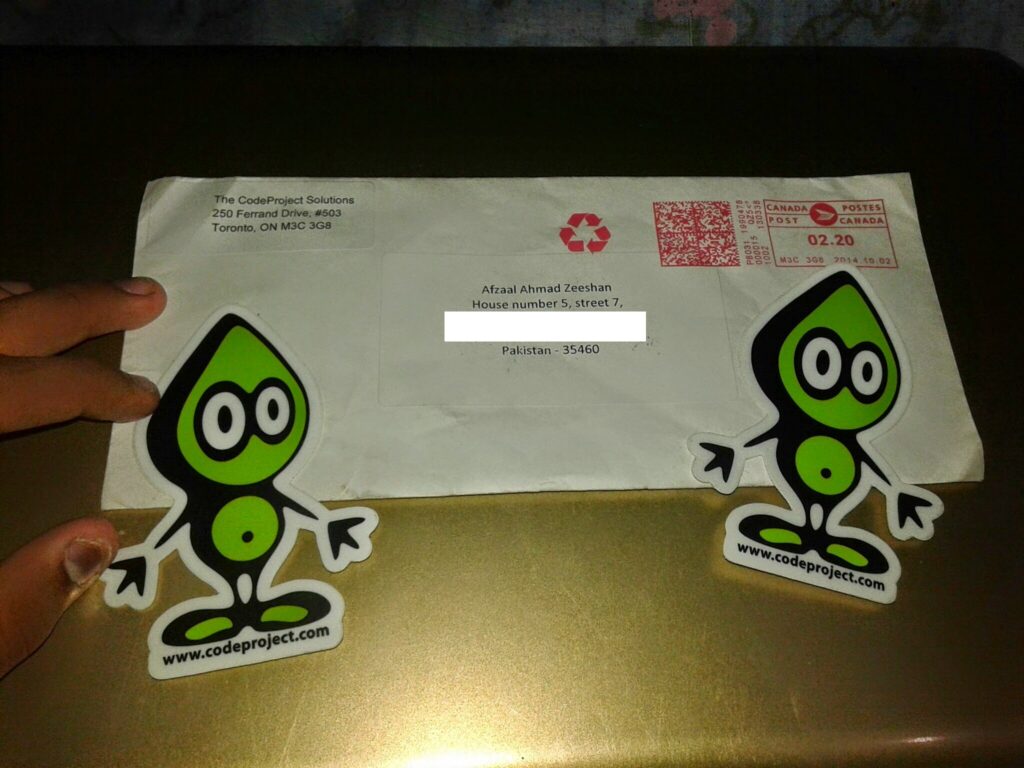
One of the first “anything” I got for doing “something” in the world of tech. I received a set of “bob” stickers for winning the second best database article of the month.
And that single award, that single shipment from Canada set me on a trajectory of not giving up. I wrote article after article, published code sample after code sample—note that Open Source was very different back in 2014 than it is today.
Tough times?
For a few years, almost every industry has been disrupted and many companies had to shut their operations down. For CodeProject, I always thought it was easy. A few reasons:
- The community was very active and healthy.
- The content was not slop (not the AI slop, but slop in sense that everyone was just posting spam). There were active moderators and reviewers who would flag bad content and get it removed.
- There was a steady stream of hackathons, competitions, and sponsored events to engage the community.
But that was not the situation, and as the message communicated by Chris Maunder (Founder of CodeProject), it seemed that were looking for the best optionss for the platform to continue. There was an attempt to resuscitate the platform as well.
However, that platform was very raw, half baked, and while it was amazing to see the community come back and post for a while, it was heartbreaking to finally seeing the platform go down again. And now, when you visit the URL codeproject.com, it gives you a landing page.
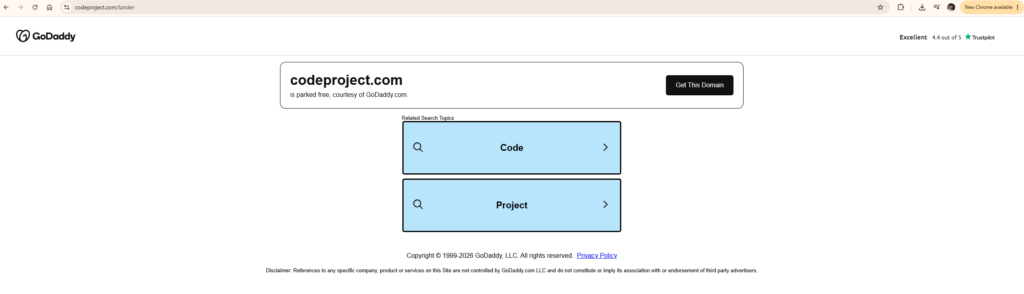
It really breaks my heart to see an era come to a conclusion.
Today, there are various platforms to author content and publish your experience. Dev.to, Substack, etc. are all good platforms to write technical documentation. Substack lets you earn money, Dev.to runs competitions. I read the content, but, you know the real problem? The main problem is most content published today is not technical content, but pure journalism. Writers read something today, write a spicy title, a subline, and a 5 paragraph gibberish that helps no one, put 5 tags and publish it. That is not technical writing, that is barely hacking the social platform. The problem is that either a platform is full of journalists or content created by AI that no body cares, or anybody can read with a simple Google search.
What CodeProject did better?
The top three points that CodeProject got better than the current platforms is:
- Community moderation
- Simple to join, harder to lead
- A spot for everyone
The moderation for the content published on CodeProject was great. It was not the tool, not the process, but the people. The people operating the community moderation platforms were actively engaged. To a point, I was also involved in actively reviewing newly published content. Report, flag, and moderate the content when it was spam, misleading, abusive, or off topic.
In my opinion, CodeProject had a less mature flagging system than Stack Overflow, but it was more affective. It was less restrictive, but more supportive.
Oh, and did you know, CodeProject did not award the moderators and community for flagging the spam content. Community did it because we followed simple boy scout rule. We wanted to leave the place better than we found it.
CodeProject supported accounts, and groups, and different ways of collaboration and communication. It then offered various different leadership paths. You want to publish articles, but don’t prefer to join and contribute to forums and questions? No problem, you can just participate there. You want to lead in asking the right questions? There is a spot for you. Oh, you don’t want to do anything but just chill, chat, and collaborate with others? There is a Lounge for you.
Now that CodeProject is gone, I will spend more time on C# Corner as the dedicated community for technical enthusiasts. Follow me there, or follow me on this website, and let’s get to learn and know each other again. 🙂
What’s next for me?
I guess, while I cannot say anything for CodeProject, I can say a few things for myself. I will miss CodeProject. I will miss the community that CodeProject offered me, and I will miss all the technical leadership and lessons that everyone at CodeProject helped me gain.
I can say without a doubt, I would not be the engineer that I am today, if it was not for CodeProject and the community members at CodeProject. Chris, thank you for taking the step to creating a platform for us techies to share our knowledge, problems, oh and the Lounge!
For the last year and so, I have been attempting to set up my own platforms to share my learnings, problems, and opinions. You can find me on Facebook, LinkedIn, some community events, and definitely on my website afzaalahmadzeeshan.com.
That is it for now!